
[ad_1]
Unemployment is more prevalent among those with secondary vocational education than those with high school education.
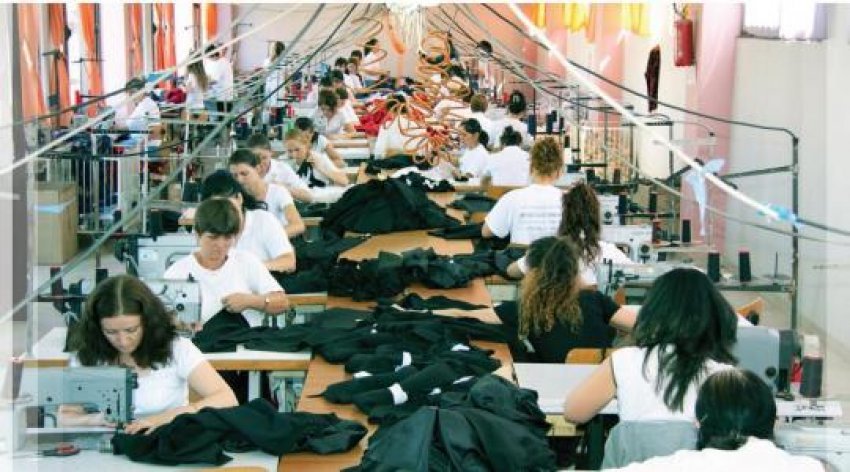
People who finish vocational education should be more integrated in the labor market due to higher profiling in some trades and who easily meet the needs of the market, compared to people who finish general secondary education known as gymnasium.
Analyzing the developments in the labor market during 2020 INSTAT noticed that 35 percent of the unemployed during the last year had vocational education, while only 10 percent of the unemployed had a gymnasium.
In the school year 2020-2021, over 19 thousand students were enrolled in vocational education. Technical-vocational training is offered in about 53 schools, of which 9 are private, mostly all located in urban areas. Most schools offer two to four profiles, while more than a quarter offer more than eight professional choices. Boys make up the majority of vocational education students. According to official data, most girls use vocational education as a path to higher education (over 79% of girls graduating from vocational education enroll in university, compared to 39.2% of boys), while boys mainly enter the labor market after graduation.
Vocational education itself is moving from production to service professions (economics, management, hospitality, tourism, and ICT).
But in addition to vocational high schools there are over 340 licensed private entities, 30 of which are Vocational Training Centers run by the state. These institutions issue recognized certificates, but there is still no monitoring system to assess the training standards they provide and the quality of the knowledge they provide.
Neighboring countries, when they emerged from communist regimes, maintained the model of vocational education and did not destroy factories. Albania, even 27 years after shock therapy, continues to develop without an oriented economic model, while today vocational education is being developed without any connection with the labor market.
The Rama government has put vocational education at the top of the priorities of the education sector, but in reality the structure of school distribution is almost the same as before the 1990s. The teaching staff is not qualified with the needs of the time, the facilities and laboratories of teaching practices are quite outdated, while vocational education is attended by the weakest students of the nine-year cycle. The average grade in the professional fields of electronics, ICT, informatics, mechanics is usually below 6 a non-positive indicator for the skills that the labor market requires.
It will not be many years before the generation of employees educated before the 1990s retires and then the alarm bells will ring in all sectors with directed professional skills. Post-1990s educators are unable to meet the needs of the time either in number or in quality. Today, education in developed countries is also facing major dilemmas, as technology is advancing at a faster pace than the curricula and the classical model of theoretical classes will need adaptation./Monitor
top channel
[ad_2]
Source link


