
[ad_1]
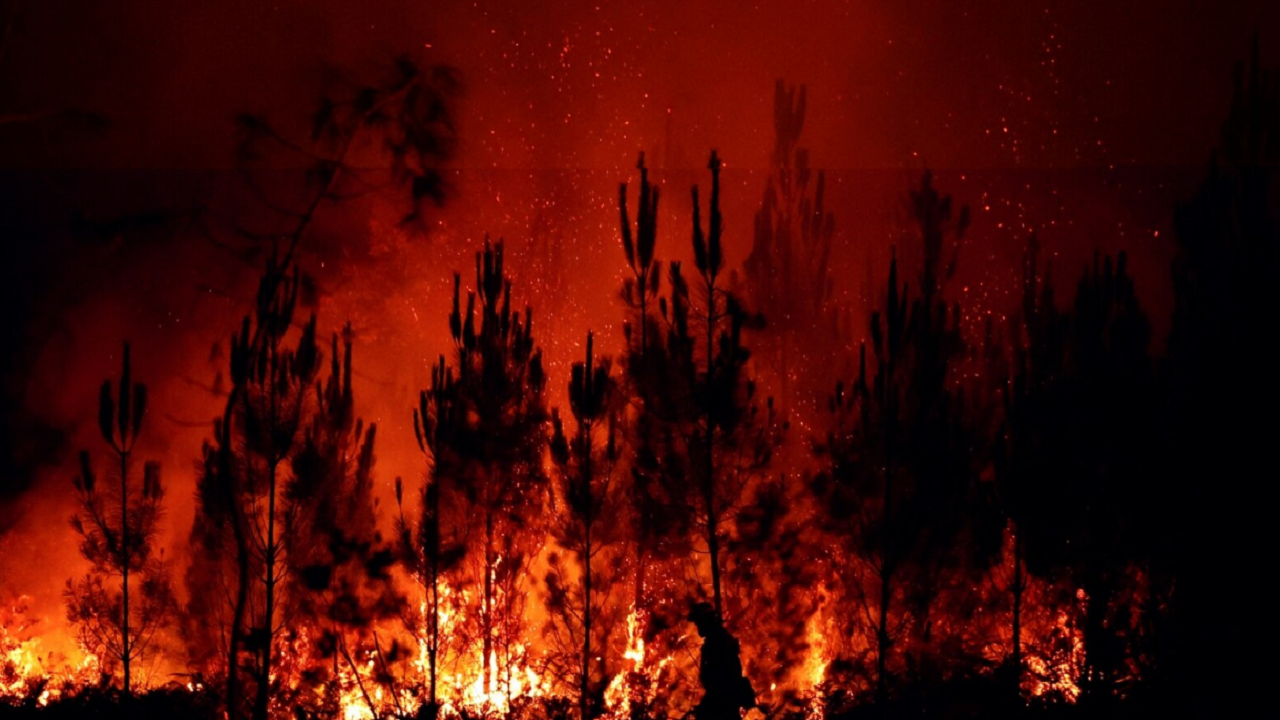
Large fires in Europe, which started spreading earlier this year, have become more frequent, causing more damage and becoming more difficult to put out.
And scientists say the fires are likely to get worse as climate change intensifies unless action is taken.
The mass migration of Europeans from rural to urban areas in recent decades has neglected forests and left them at the mercy of droughts and heat waves that are becoming more common amid global warming. And, a small spark can cause an “inferno”.
Fighting forest fires in Europe has never been more difficult. In this text you can understand why.
What is causing wildfires in Europe?
The continent’s so-called rural exodus began in the second half of the last century, as Europeans moved to cities in search of a better life, and this exodus has left large rural areas behind and made them vulnerable.
Forest areas are filled with combustible material, said Johann Goldammer, head of the Global Center for Fire Monitoring, which is a United Nations advisory body. Combustible materials include rotting tree trunks, fallen branches, leaves and dried grass.
“The landscape is becoming explosive,” he added.
Carelessness with small sparks is sometimes enough to start a wild fire. In Portugal, where more than 100 people died in wildfires in 2017, authorities have stated that 62 percent of wildfires are occurring as a result of agricultural activities, such as stubble burning.
Is global warming a factor in wildfires?
Climate change has added a new and frightening dimension to wildfires and made them even more threatening.
This is particularly true in southern Europe, where the frequency of fire-causing weather conditions – high temperatures, drought and high winds – have made summer wildfires “the new norm”, said Friederike Otto, a lecturer at of Climate Science at the Grantham Institute for Climate Change at King’s College London.
Earlier this month, the European Union pointed out that in the past five years, the bloc has witnessed the most intense wildfires in history and that the continent’s current drought could worsen. According to the United Nations, the Mediterranean region is warming 20 percent faster than the global average.
EU fire statistics prove this problem. The number of European villages that have burned has more than tripled this year, with almost 450,000 hectares burned by July 16, compared to an average of 110,000 hectares in the same months during the period 2006-2021.
As of July 16, Europe has witnessed almost 1,900 wildfires, compared to an average of 470 fires in the years 2006-2021.
Have wildfires changed?
Droughts and heat waves associated with climate change have made it more difficult to fight wildfires, as climatic conditions make them spread faster. Scientists argue that climate change will continue to make weather more extreme and wildfires will be more frequent and more destructive.
This includes the so-called “megafires” – flames so large that they are practically unstoppable.
Europe at war with fires
Spain’s problems with wildfires this year began in early spring, when the country recorded its earliest heat wave in two decades. Temperatures in many Spanish cities reached over 40 degrees Celsius – temperatures usually recorded in mid-summer.
Neighboring Portugal also recorded its hottest May in nine decades, when 97 percent of the land was classified as experiencing severe drought. In France, this year’s May was also the hottest in history.
“We will not be able to completely prevent wildfires,” said Otto of King’s College London. “We have to learn to live with this,” she added.
How to live with more wildfires?
Scientists say there is no reason to lose hope, despite the horrific sight of the fires and the strain on fire services battling them.
“This is not God’s work,” Otto said as he talked about the intensification of wildfires. “This, to a large extent, is our doing and we have a lot of power to change this situation.”
Slovenia faces one of the biggest fires ever
Things we can do to adapt include ending the burning of fossil fuels and educating people about global warming, she said.
Forest management also needs to be reviewed, said Amila Meskin, policy adviser at the Brussels-based European Forestry Association. This association represents forestry companies, enterprises and government agencies in 25 European countries.
Projects such as water conservation schemes, mixed forest species and wetland restoration have already started in some states.
However, the effects of these projects are not expected to be seen very soon. Short-term planning in forestry can take over 50 years, and fundamental change will take decades.
Meskin said he sees a general lack of interest in rural jobs and added that he has noticed that forestry is not a very popular business. This situation, according to her, must change.
According to Meskin, perhaps the shock of the wildfires will spur a new public interest in forest care.
“It’s a very emotional thing to see the forests burning,” Meskin said. “It is a very, very sad situation”. Radio Free Europe.
top channel
[ad_2]
Source link


