
[ad_1]
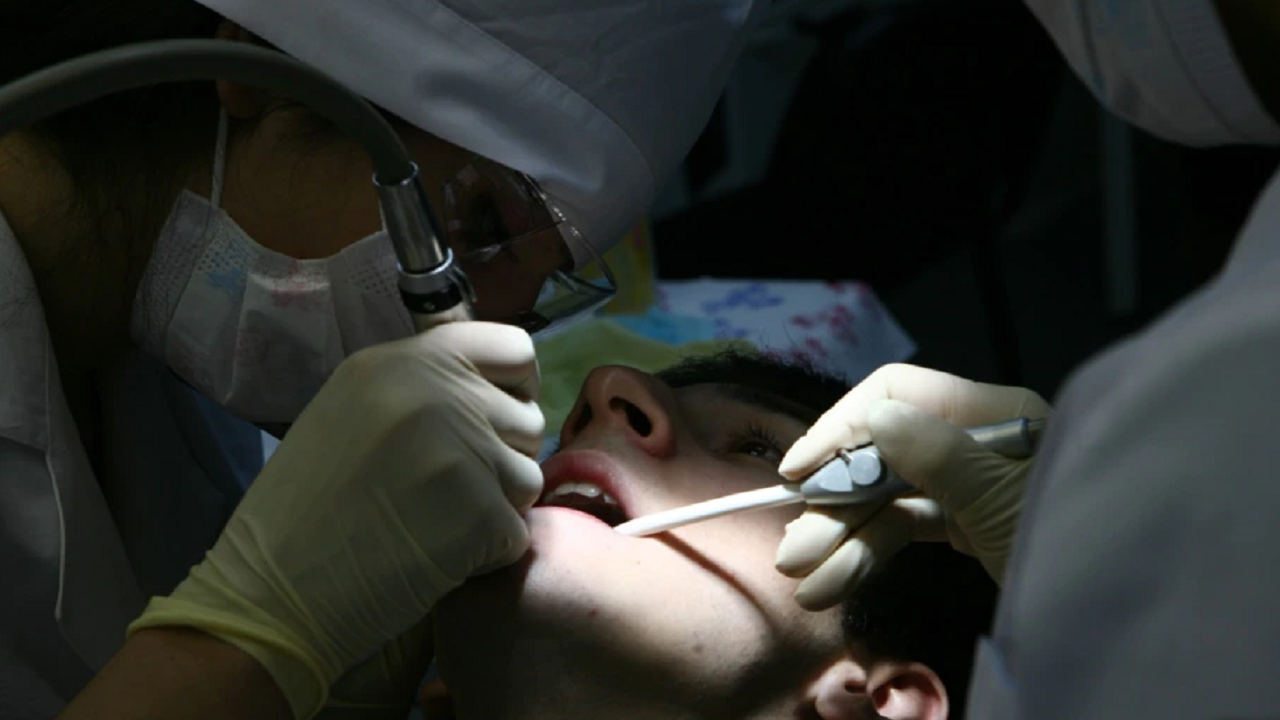
Going to the dentist is never welcome, but for Russians living under Western-imposed sanctions, dental visits are now even more difficult.
The Russian dental industry is almost entirely dependent on European and American imports of equipment and materials, and now, facing a virtually frozen supply chain, dentists are trying to weigh potentially inferior treatment options for patients – and have to raise prices .
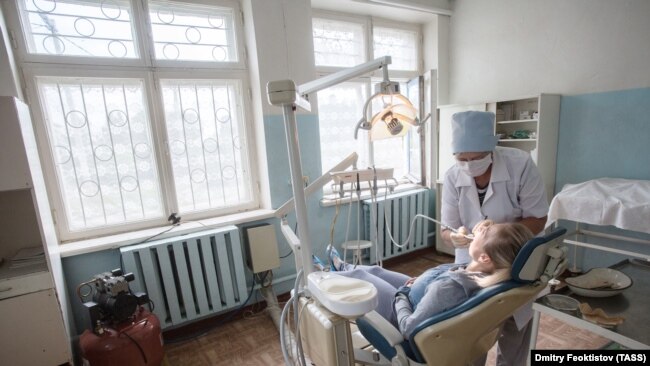
“Teeth treatment has always been a luxury, but now even more so,” says Inna, owner of a dental clinic in the Siberian city of Krasnoyarsk. “No matter how much you care for your patients, it is impossible to keep the same prices.”
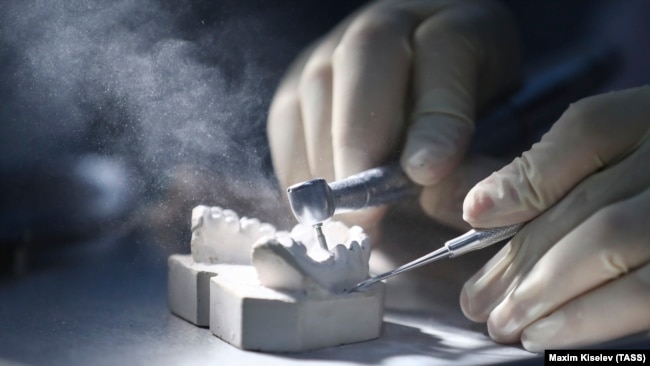
Inna says every piece of equipment and dental material in her clinic is imported “without exception,” listing fillings, implants, dentures, crowns and cement, among other essentials. Where previously these would have been ordered from European suppliers, many in Germany and Italy, now the supply chain is completely dry. Now in addition to having to pay higher prices, importation in many cases is simply not possible.
Some dentists bought and stockpiled supplies in early March, before many Western sanctions took effect. The Innas Clinic purchased materials for next year as well.
“If we had not done this, I do not even know what we would do now,” she said. “Now you can only buy quality materials if one has reserves and their prices are on average three times higher than before the war.”
She gives the example of an American filler called Filtek, which in February cost 1800 rubles ($ 33). “Now, you can not find it for less than 4,300 ($ 79),” she says.
Other dentists point out that stockpiling can not be done for very long.
“The medical materials have a lifespan of about a year,” says Igor Rodin, an orthopedist, chief physician and owner of a network of dental clinics in Tyumen. He says their supplies are now four times more expensive than ever. “First of all, the cost of consumables – which are needed every day – has increased. “Paper is more expensive, such as aprons and saliva extractors,” he said.
“We can not reject patients”
On the other hand, patients are facing high bills. Lydia, a resident of Tyumen, says she has been taking her son to an orthodontist in Chelyuskintsev for several years.
“Previously, an initial visit cost 700 rubles ($ 13), and a second visit cost 500 ($ 9),” she says. “Now they are asking for $ 1,000 ($ 18) for the next visit – prices have doubled.”
Inna says most of the patients she has seen have been “benevolent” about price increases, especially because her clinic was stockpiling in order to gradually raise prices.
Anesthesia at the beginning of the year cost 700 rubles ($ 13); is now 950 ($ 17.50). “A root canal now costs $ 12,000 ($ 220) instead of $ 8,000 ($ 147) before the crisis.”
“We understand that people no longer have money and for many of them these are expensive services, but what can we do? “We can not work at a loss,” she said.
The most expensive service offered by dental clinics in Russia is definitely dentures, especially implants. The field of implantology is completely dependent on imports and is now on the verge of decline.
“I have always preferred to work with German, Swedish and American materials,” says Ilya Shumakov, an implantologist and orthopedic dentist from Novosibirsk. “Premium implants use titanium compounds, with minimal impurities.”
“This is not something you can save,” he added, adding that many materials have now simply disappeared from the Russian market.
“Manufacturers do not want to work with our state,” he said. “You can’t buy half what you need.”
Rodin says his dental clinics fell in the red in the first quarter of 2022.
“The hardest part is the insurance companies. “They make annual contracts that say they can’t raise prices,” he said. “Today, we follow the 2020 price list [kompanisë ruse të sigurimeve] SOGAZ. “And we can not reject patients.”
He says they had to use tactics to delay or postpone patient appointments.
“Yes, we started postponing appointments, saying that all appointments are busy – call again within a week. “We played a dirty game, but SOGAZ did the same.”
Worse than Russian roulette
Without the quality equipment and materials that both doctors and patients need, dentists are carefully looking for alternatives made elsewhere. However, they are persuaded not to use local products, citing poor quality and poor selection.
“We saw what we could find in Russia. To be honest, there is no comparison with foreign materials “, says Inna from Krasnoyarsk. “We do not want the customer to return to us within a week, for example, with a dropped charge. In that case, we will lose more than we will gain. “
She says there was a level of confidence and security in supplies from Europe and the United States, which confidence is lacking when it comes to Russian counterparts.
“With our products so far, it’s Russian roulette,” she says.
Suppliers in China have been eager to fill the gap in the Russian market. Inna says her representatives wrote to her and called her directly, but she is unsure.
“As a last resort, we will have to move to China. They now have a unique position to occupy the Russian market. “But there are doubts whether we will benefit from this,” she said.
“The cost is comparable to European equipment, but we will have to look for quality.”
Shumakov has also seen Chinese firms trying to replace imported importers.
“The American 3M, for example, left Russia completely. “Now the Chinese are trying to take their place.” “We looked at the implants offered by China. It looks good on paper, but I do not know what will happen in practice. And there is no one to ask.
“Everyone else has worked with imports from Europe or the United States, so they can give no advice on which is better.”
There is a small amount of dental materials produced and available domestically, but the thought of using them is a Soviet “nightmare”.
“I know very well what quality is,” says Shumakov. “Sometimes I have used our materials, but only for intermediate work. They are suitable for placing a temporary but not permanent filling.
“Impressive masses, cement, fillers – all this is not as good as it should be.”
What about Russian anesthetics?
“No self-respecting dentist would use them. It’s a nightmare to switch to lidocaine again in large 5cc syringes with thick needles. “I hope this does not happen,” said Shumakov.
For patients, too, the thought of returning to poor-quality Soviet-era dental treatments — when dentists had limited choice of materials and lacked modern equipment and supervision — is a dire prospect.
“I do not want to get to the point where we have to use it [implantet ruse për trajtimin tim]”, Says Olga Kerimova, a resident of Krasnoyarsk. “I still remember what Soviet dentistry was. I remember those yellow fillings and iron teeth. No thanks. “I do not want to return to the USSR.”
‘Do everything now’
Despite the prices, people who need a dentist can not postpone treatment indefinitely. Inna encourages people to check their teeth before more serious problems occur – and cost even more.
“Prices will continue to rise, so it’s better to do everything now,” she said. “People are not idiots. They know how to count, especially in a crisis. They know that a cavity will not go away on its own. If you do not put a stamp for 7,000 rubles, then you will have to treat the channels later for more than 12,000 rubles.
Shumakov says his clinic had an influx of people in March who wanted to treat their teeth at old prices and that even now there is no shortage of patients.
“I hope that the problems with supplies will be solved and we will have something to work with,” he said.
top channel
[ad_2]
Source link


