

[ad_1]
Russia’s threat to shut off Europe’s gas tap has sparked a feverish search for alternatives. Of the options that are on the table none is very fast and valid.
What everyone was afraid of is now a reality: Russia has threatened to cut off gas supplies to Europe. But the EU also wants to gradually break away from Russian imports. Purchasing countries are looking like feverishly for other alternatives. This includes Germany, the largest buyer of Russian gas. This country receives more than half of its gas from Russia. Many possibilities are discussed, including the extension of nuclear power plants. Even Green Economy Minister Robert Habeck says there are no taboos. But what are the alternatives?
Delaying the exit from atomic energy
The producers of power plants have signaled readiness for talks, but have made it clear that the postponement is not done as simply as expected, because there is a lack of fuel rods, and expertise, as the engineers of these plants are either retired or near retirement. These are not insurmountable obstacles, but nuclear power plants can not replace grid power plants. The three nuclear power plants that will have to go off the grid by the end of this year can produce 4 gigawatts of electricity, which is about 7% of the average energy requirement, even if they operate at full capacity. But German energy consumption in 24 hours ranges from 35-40 gigawatts at night and 75 to 80 gigawatts per day.
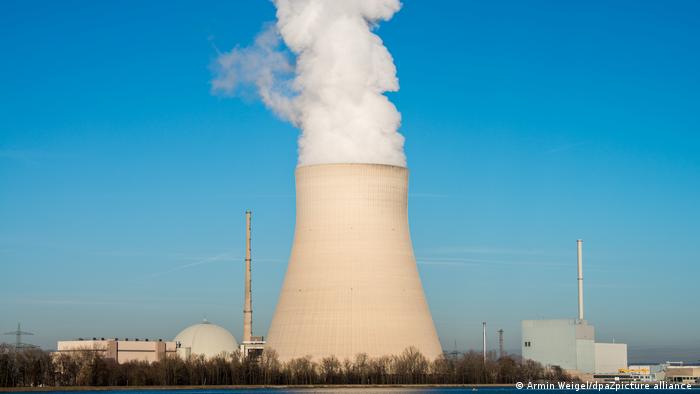 Germany can not meet its energy needs with only the remaining nuclear power plants
The full commissioning of nuclear power plants is not just an economic issue. It is not technically easy to operate at full capacity and reduce them, unlike power plants, where it is often the gas turbines that drive the generator. Therefore in the power grid they are responsible for the rapid compensation of power fluctuations, when for example in the morning millions of people turn on the light and put into use the coffee machine and the industry starts working.
Restoration of coal-fired power plants
Coal-fired power plants are more flexible than atomic ones, but not like thermal power plants. Meanwhile, power plants are often closing the gap at noon, which was previously closed by decommissioned coal-fired power plants. But extending the life of coal-fired power plants as a whole could prevent even more dependence. IEG. “But this is our smallest problem. Because only one-sixth of Germany’s net energy consumption generated by gas is related to electricity generation.
Half of the natural gas is used in Germany for heating and water heating, and in the business, trade, services sector.The rest is used by industry for its processes. Despite these ideas about the use of coal energy, some of the coal comes from Russia.
Replacement of natural gas network with hydrogen
Indeed natural gas containing mainly methane can be filled to 20% by volume with pure hydrogen without damaging the effectiveness of the gas mixture in later use. The energy content of this mixture would be smaller, 20% of the mixture could only replace 7.5 natural gas. But this opportunity cannot be used so quickly as to reduce Russia’s dependence on Russian gas. Because 95% of the hydrogen usable today in Germany is derived from natural gas and coal. It is known that these largely come from Russia.
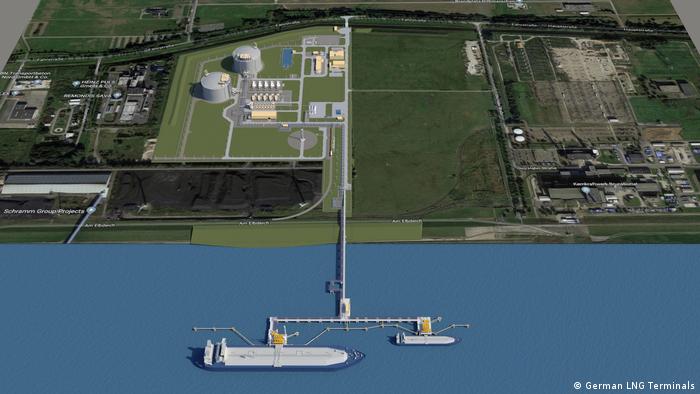 Germany plans to set up a liquefied natural gas (LNG) terminal in Brunsüttel
Liquefied natural gas export
If natural gas cannot be obtained from Russia, then it must be obtained elsewhere. The supplying countries are Qatar, Australia, Canada and the USA. But most of them are tied to long-term contracts in the meantime. The quantity in the fast markets may be enough to cover the gaps of Russian gas, according to calculations. The problem lies, says expert Nolden, if and how this gas will go to consumers. Spain has good LNG storage capacity, and is connected to the European grid and Germany, but “the direction of flow of this gas is normally from north to east, south and west. “If physics allows the turn, it is still open.”
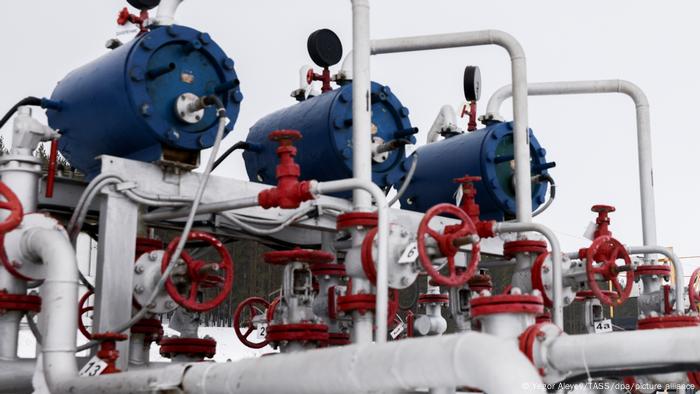 Oil extraction in the Russian republic of Tarstan
Conclusion: Dress warmer
Next week Nolden and other members of the German science group TransHyDe want to present a report on how security of supply in Germany could be increased even without Russian gas. But Nolden did not provide preliminary information to DW. His prognosis so far is reserved: The positive is that despite the electricity grid, a gas grid does not collapse when it is not well supplied. But he sees no other quick alternatives to Russian gas.DW
top channel
[ad_2]
Source link


