

[ad_1]
The project “Signs of Remembrance: For a visitable city without a guide”, gathered in Durrës academics, researchers, archaeologists, historians and cultural specialists.
“Signs of Remembrance” contains evidence on the thousands of years of history of the city of Durres, divided into different eras, the identification of personalities, starting from the myth of King Epidamus, Monun, the role of St. Paul, Caesar; the first bishop of Durrës, “German” maps, the figure of Jan Kukuzel, the battle of Emperor Julius Caesar, the emperor of Durrës Anastas, “Egnatia” street, the architecture of the Amphitheater, the Byzantine wall, and the questions on the thesis whether there was a university in Durrës, or the existence of a printing house at the time when Gjon Buzuku worked “Meshari”, the events of the Middle Ages, to the present day with rare stories, etc.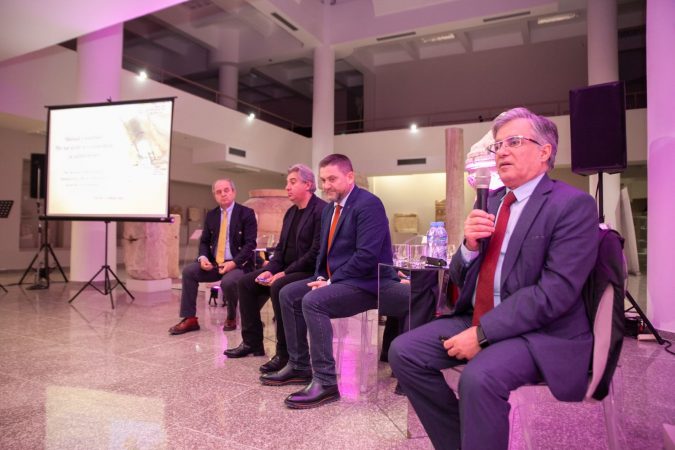
“Signs of memory” is a project that aims not so much to make the unknown known but to make visible the invisible, to bring to light the millennia of civilization of Durres, by identifying events, places and personalities associated with to.
Presented at the Archaeological Museum of Durrës, the project is considered the largest archive of historical and cultural values in the centuries of the city of Durrës. The presentation of the study turned into a cultural-civic conversation between the participants, well-known representatives of the intellectual community of Durrës, such as dr. Hasan Ulqinin, prof. dr. Hajredin Isufin, prof. asoc. dr. Lida Mirajn, et al.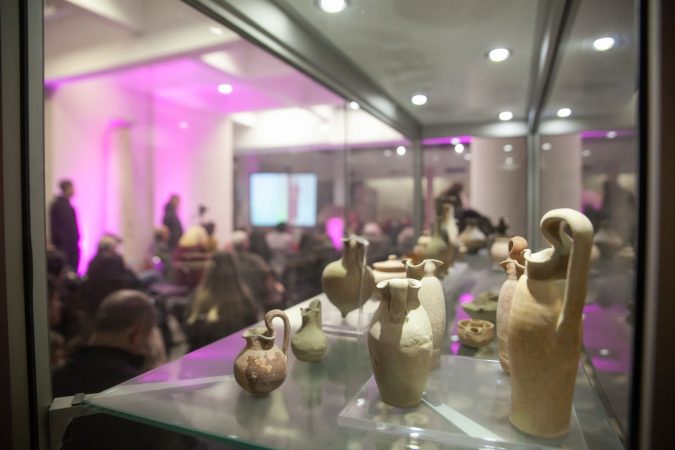
The project is designed under the direction of acad. Shaban Sinani (Academy of Sciences), with a team of scholars of several fields, as prof. dr. Irakli Koçollari (Academy of Sciences), prof. asoc. dr. Marenglen Kasmi (Academy of Sciences) and dr. Arian Leka (Academy of Albanological Studies) who presented all the historical facts and how this important project will be realized.
Present Mrs. Emiriana Sako, mayor of Durrës, who, in her opening speech, stressed the importance of certifying the material and spiritual cultural heritage of the city from the beginning until today, not only to inaugurate its assets in the national lists and international, but also to promote cultural, religious and historical tourism.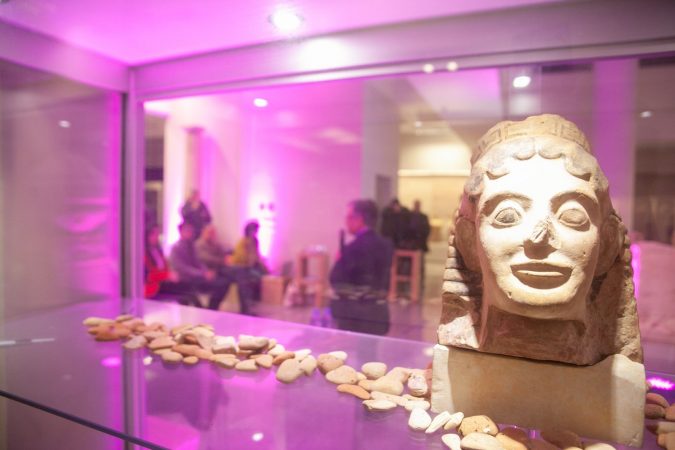
“I consider this meeting of ours as a case of consultation with people of expertise, here in Durres and from the capital. “With the project” Signs of Memory “we want to return to Durrës what belongs to it: the appearance of a metropolis, which won and preserved over the centuries, proving the European quality of our civilization,” said Sako, who added that this project complies with the EU directive to certify the history and tradition, which in the case of the city of Durres “makes us feel proud and proud”.
The mayor, also a SP candidate in the March 6 elections, mentioned the EU-Culture project, in cooperation with the Ministry of Culture, which envisages the recovery of historic buildings damaged by the earthquake of November 26, 2019. “Rehabilitation of museum works is a value of added, not only for Durrës residents, but for all visitors and tourists ”.
The project listed facts and evidence that the city of Durres is a place of saints, from St. Caesar and St. Asti, to St. John Vladimir. This city has been visited by missionaries, pilgrims, legates, crusaders and scholars of the West, from Robert Guiskard and Guilliam Adaes, to Prince Vidi, the first crown prince of Albania.
The authors of the project cited facts that Durrës is a city of statutes, magistrates, councils and civic forums, a city of counts and nobles, the western gate of Albania, the place where order was maintained by republican rules.
Signs of Remembrance help us to learn where Pal Engjëlli preached, where Fan Noli spent his last night in Albania, but also to know where the zero billion of “Via Egnatias” is and where we should mark the designer in Durrës of her Ignatius, as suggested by academician Shaban Sinani.
“Signs of Remembrance” lets us know where Julius Caesar landed and where the medieval lodge of the city was, where the protagonists of the city’s independence gathered in the early 20th century and where the atheist movement began in 1967; where the city took refuge in the days of the evacuation during the anti-fascist war and where the Beatles stayed in transit.
Academician Sinani presented the reasons for the realization of the project, emphasizing that, “Memory marks are universally accepted references to history. Through them, tradition is transformed into an image. They are evidence of the survival of the values of civilization over the centuries. The agreement of at least two generations on a path of development is a condition for progress. “The agreement of a people for the signs of memory is a condition for the monumentalization of history.”
top channel
[ad_2]
Source link


