

[ad_1]
A solution is required for the holding of Serbian elections in Kosovo. A distinction must be made between Serbia’s referendum that Kosovo banned from being held on its territory and Serbia’s elections, experts say.
April 3, the day when Serbia’s presidential and parliamentary elections are expected to take place, is approaching, while pressure is mounting on the leaders of Kosovo institutions to allow them to be held in Kosovo. The Prime Minister of Kosovo, Albin Kurti, says that he is in contact with the embassies of the most industrialized countries QUINT and the European Union, to find a solution for Kosovo Serbs who want to vote in the parliamentary and presidential elections on April 3 in Serbia.
Kurti: The rights of Serbs should not be violated, nor should the citizenship of Kosovo
According to Prime Minister Kurti, the government he leads aims to ensure that the rights of Serbs are not violated, but at the same time that Kosovo’s citizenship is not violated. “We consider that on the one hand, we should not make it impossible for Serbs in Kosovo, who have in addition to the citizenship of Kosovo and Serbia, to have the right to vote, but on the other hand, the constitution, the law in Kosovo, the final resolution of the Assembly of January 15, oblige us the basis of any solution that we will take in the future “, said Kurti.
The Assembly of Kosovo on January 15, adopted a resolution through which it opposed the holding of elections organized by Serbia in Kosovo, for a referendum of Serbia on constitutional changes. This includes the organization of Serbian elections in Kosovo. The QUINT countries and the European Union had welcomed with regret the decision of the Government of Kosovo that did not allow the referendum to be held in Kosovo.
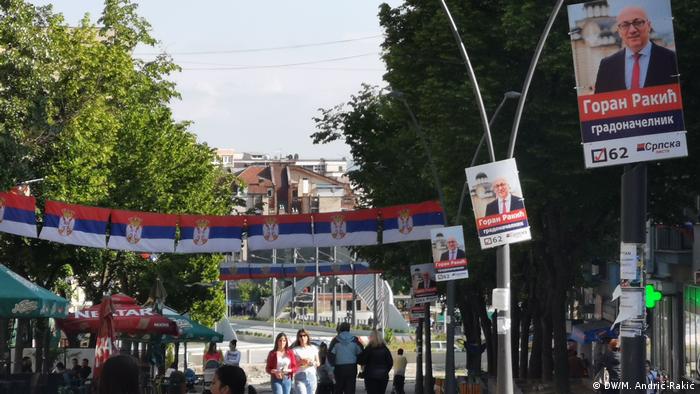 View from the local elections in Mitrovica, May 19, 2019
Vuiqi kërkon demands that elections be held in Kosovo
The President of Serbia, Aleksandar Vuiqi., Has said that the Serbian elections on April 3 will be held in Kosovo as well. He warned of “consequences” if they are thwarted by Pristina authorities. “I hope that no one interferes in the voting of Serbs in Kosovo and I also hope that someone will understand what the consequences would be if he intervened,” Serbian media quoted President Vucic as saying.
The influence of the international community
Two days ago, the Prime Minister of Kosovo, Albin Kurti, talked on the phone with the US State Department Advisor, Derek Chollet regarding the elections in Serbia in Kosovo. Chollet said on Twitter that he had a “good conversation” with Prime Minister Kurti and mentioned the importance of eligible voters in Kosovo “being able to participate in the elections”. “I had a good conversation with the Prime Minister of Kosovo Albin Kurti. “I thanked him for his strong support on the issue of Ukraine and stressed the importance of providing voters with the right to vote in Kosovo, so that they can participate in the next Serbian national elections on April 3,” the US official wrote on Twitter.
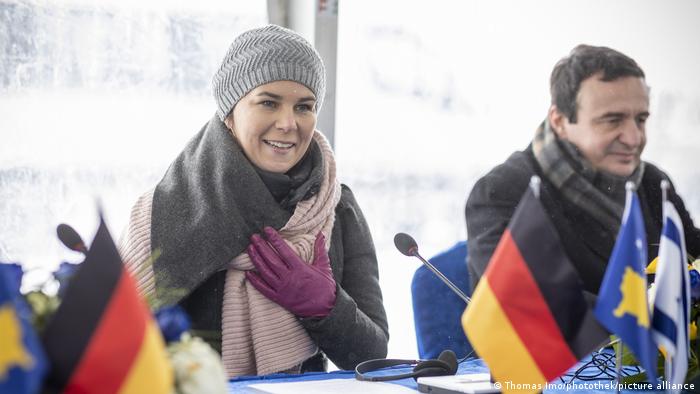
During her visit to Kosovo last week, German Foreign Minister Annalena Baerbock said Kosovo and Serbia must find ways to hold elections. “One of the most important issues is the strengthening of trust in the region. First of all, progress is needed in the dialogue process for the normalization of relations between Kosovo and Serbia. “These two countries must also find a solution for holding early parliamentary and presidential elections in Serbia on April 3,” Baerbock said.
Stalled dialogue
Despite calls from international representatives for Kosovo and Serbia to make progress in the dialogue, this does not seem to be happening at the moment. EU foreign policy chief Josep Borrell confirmed in an interview with DW that the dialogue between Kosovo and Serbia is not going well. “She is not walking. I am in charge of this dialogue and it is not going well. At least he is not moving at the pace he should. The European Union has a mandate from the United Nations to coordinate, push for and activate this dialogue. I have appointed one of the best diplomats for this task, and I must say that more needs to be done, more work is needed. “We need to push both sides in order to understand that there is only one solution to the problem and that it comes through dialogue, knowing that it will not be easy,” Borrell told DW.
The Prime Minister of Kosovo, Albin Kurti, for his part, said that “after Russia’s aggression in Ukraine and the placement of Serbia on the Russian side, the meetings between Kosovo and the Serbian state have become much more difficult compared to last year.” However, he said that “high-level meetings between him and the President of Serbia, Aleksandar Vucic, also depend on Brussels.” “I believe that the situation is more difficult than ever, it depends on when we receive the invitation from Brussels, but after the Russian invasion of Ukraine and the shocking military aggression of the Kremlin on the people of Ukraine that is waging a relentless liberation war, in which case we We expressed our readiness to receive 20 journalists and 5,000 refugees, but we also joined the US and EU sanctions, while Serbia practically sided with the Russian Federation. The meetings are in a much more difficult situation than last year. “, Declared Kurti.
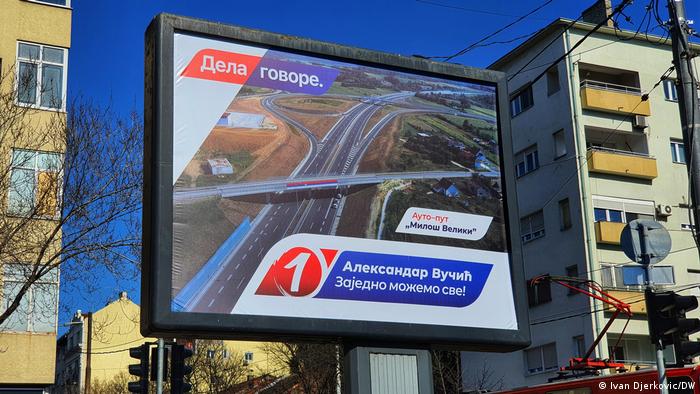 Posters of the current election campaign in Serbia
Possibility of holding elections
What is known so far is that Kosovo would consider holding Serbian parliamentary and presidential elections in Kosovo, if official Belgrade sends a request to the Government of Kosovo. This was said after a meeting of the presidency of the assembly, the head of the Parliamentary Group of the ruling party Mimoza Kusari-Lila. “The response of Kosovo institutions, already confirmed at the legislative level, is that only in an acceptance of an official request from the state of Serbia to the state of Kosovo with a request based on applicable Kosovo laws and European practices, would be considered. that request and a decision would be made for or against the holding of elections “, said Kusari-Lila after the meeting of the Presidency of the Assembly. Opposition parties, meanwhile, expect better coordination between the government and the opposition on the issue of holding Serbian elections in Kosovo.
Difference between referendum and elections
Experts on political issues and justice say that a distinction should be made between Serbia’s referendum and its elections. The director of the Kosovo Institute of Justice (KLI) Ehat Miftaraj, told DW that, “the institutions of the Republic of Kosovo have rightly taken a firm stand not to allow the organization of a Serbian referendum in the territory of the Republic of Kosovo, as allowing the organization of the Serbian referendum in Kosovo, could be directly related to the exercise of the sovereignty of the Republic of Serbia in the territory of Kosovo. “Whereas, the organization of national elections based on the conditions set by the Republic of Kosovo, for the citizens of the Republic of Kosovo from the Serb community, is extremely different from the referendum, and such a thing should be considered by the institutions of the Republic of Kosovo. This is also based on the request of international partners with special emphasis on the American State Department ‘, says Miftaraj.
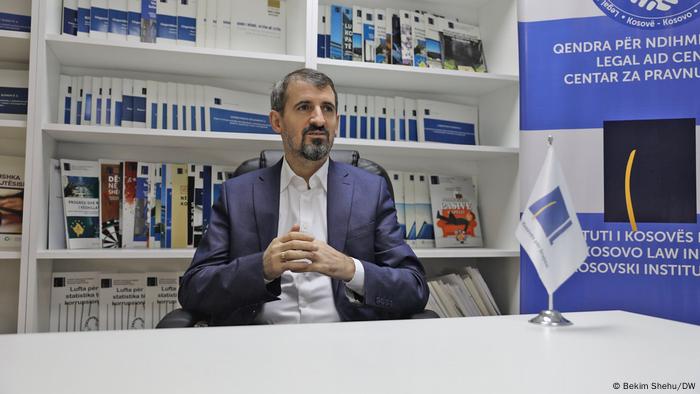 Ehat Miftaraj
The last parliamentary elections, which Serbia organized for the Serb community in Kosovo, were held on June 21, 2020. Those elections were held according to an earlier practice, where the OSCE mission in Kosovo, has collected votes, this practice established since 2017. The OSCE collected the votes of Kosovo Serbs after the closing of polling stations, and they were then sent for counting in two border towns of Serbia./DW
top channel
[ad_2]
Source link


